
Backflow Prevention in Kamloops: What It Is, Why It's Required, and When Your Device Needs Testing
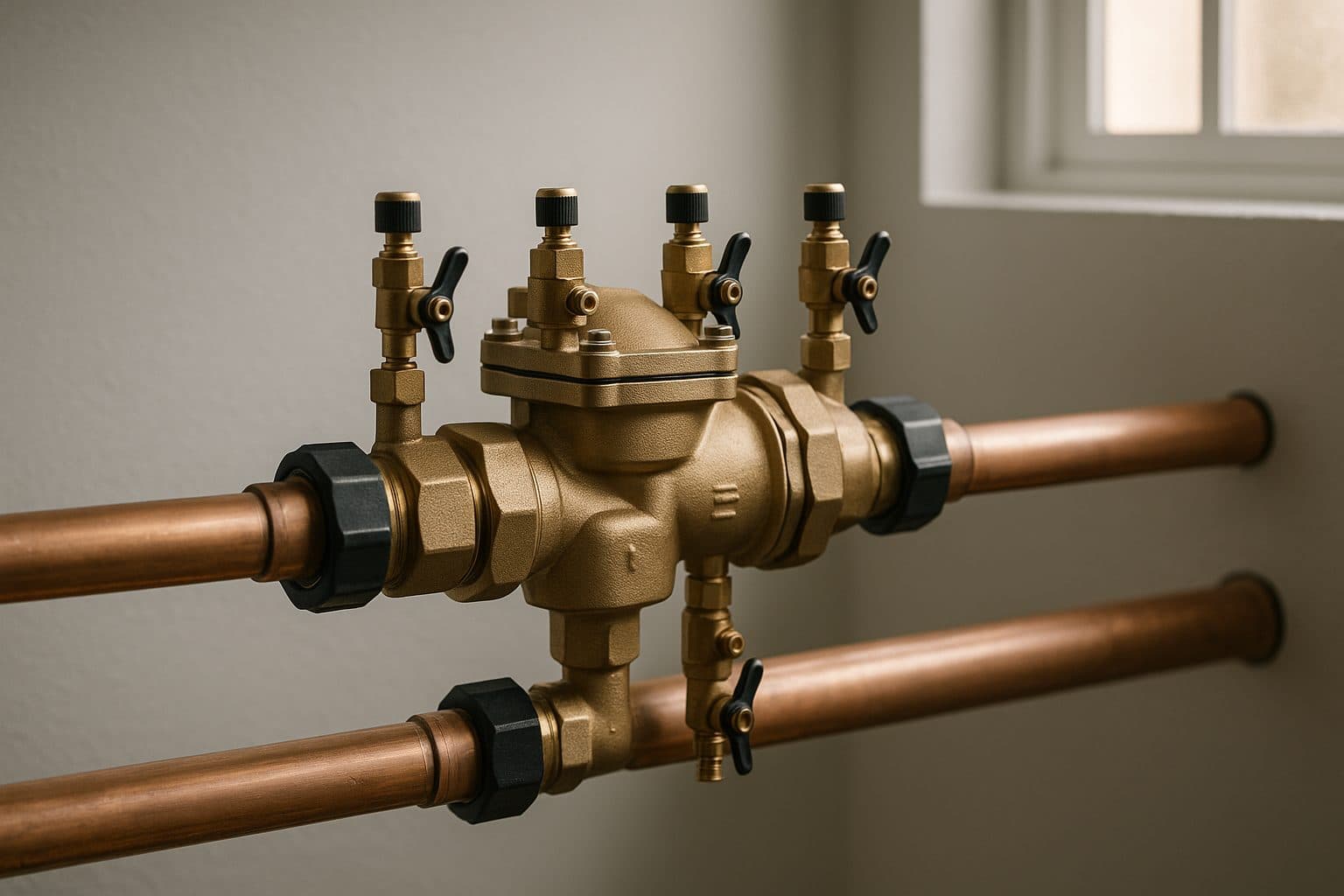
Every spring in Kamloops, thousands of homeowners turn their irrigation systems back on without giving much thought to the small device protecting their drinking water from contamination. That device — a backflow preventer — is one of the most important and most overlooked components in a home's plumbing system. In BC, many types of backflow assemblies are required by law to be tested annually by a certified tester, and failing to do so can put both your household and the municipal water supply at risk.
What Is Backflow and Why Does It Matter?
Backflow happens when water flows in the wrong direction — back toward the potable water supply instead of away from it. It occurs in two main scenarios: backpressure, where a downstream system operates at higher pressure than the supply line, and backsiphonage, where a drop in supply pressure (such as during a water main break or heavy firefighting draw) creates a suction effect that pulls downstream water back into the main.
In both cases, the risk is that contaminated water — fertilizer, pesticides, bacteria, or chemicals — can be drawn backward into the municipal water system or your home's drinking water lines. Backflow prevention devices are mechanical valves that physically block this reversal of flow.
Where Backflow Preventers Are Required in Kamloops Homes
Not every tap requires a backflow preventer, but several common residential systems do under the BC Plumbing Code and City of Kamloops cross-connection control requirements:
- Irrigation systems — any in-ground or drip system connected to the municipal supply requires a testable backflow preventer, since sprinkler heads can sit in soil treated with fertilizers and pesticides
- Hose bibs and outdoor faucets — hose connections are a high-hazard cross-connection because garden hoses are routinely submerged in buckets, pools, and chemical applicators; a vacuum breaker or hose bib backflow preventer is required
- Fire suppression sprinkler systems — residential sprinkler systems typically require a double-check valve assembly or reduced pressure zone (RPZ) device
- Boilers and hydronic heating systems — closed-loop heating systems use treated water that must be separated from the potable supply
- Swimming pools and hot tubs — fill lines require proper backflow protection to prevent pool water from contaminating the water supply
Types of Devices and Their Testing Requirements
Atmospheric Vacuum Breakers (AVB)
The simplest type, found on many hose bibs. These are non-testable devices — they're inspected visually and replaced when they fail. They protect against backsiphonage only, not backpressure, so they're not suitable for all applications.
Double-Check Valve Assemblies (DCVA)
Used for low-to-medium hazard applications like irrigation systems and fire suppression. These are testable assemblies with two independent check valves and test cocks. In BC, DCVAs on residential irrigation systems must be tested annually by a certified cross-connection control technician.
Reduced Pressure Zone Assemblies (RPZ)
Required for high-hazard applications. RPZ devices include a relief valve that opens to discharge water if either check valve fails, providing a higher level of protection. They must also be tested annually and are more sensitive to installation quality — they need to be installed above grade and accessible for servicing.
What Happens During an Annual Test
A certified tester connects differential pressure gauges to the test cocks on your device and measures how each check valve and relief valve performs under controlled conditions. The whole process takes about 15–20 minutes per assembly. If the device passes, the tester records the results and submits them to the City of Kamloops's cross-connection control program. If it fails, the device must be repaired or replaced and retested before it's back in service.
A failing backflow preventer doesn't always mean a full replacement — often a simple rebuild kit restores the device to spec. But running an irrigation system on a failed or untested device isn't just a bylaw issue; it's a genuine contamination risk to your household's water.
Timing Your Test Right
Spring irrigation startup is the natural time to get your backflow preventer tested. Before you commission your system for the season, have the device tested so you're running on a verified, compliant assembly all summer. Don't wait until the City of Kamloops sends a notice — testing demand peaks in May and June, and booking early means you're not scrambling when the first hot stretch hits and everyone wants their systems running.
Advanced Plumbing Kamloops carries certified cross-connection control technicians who test, repair, and replace backflow prevention assemblies throughout Kamloops and the surrounding Thompson-Nicola region. Contact us this spring to get your device tested before the season gets busy.
Need Professional Plumbing Help in Kamloops?
Our experienced team is ready to help with all your plumbing, heating, cooling, and gas fitting needs.
Contact Us Today