
Water Filtration for Kamloops Homes: Carbon, RO, or Whole-Home?
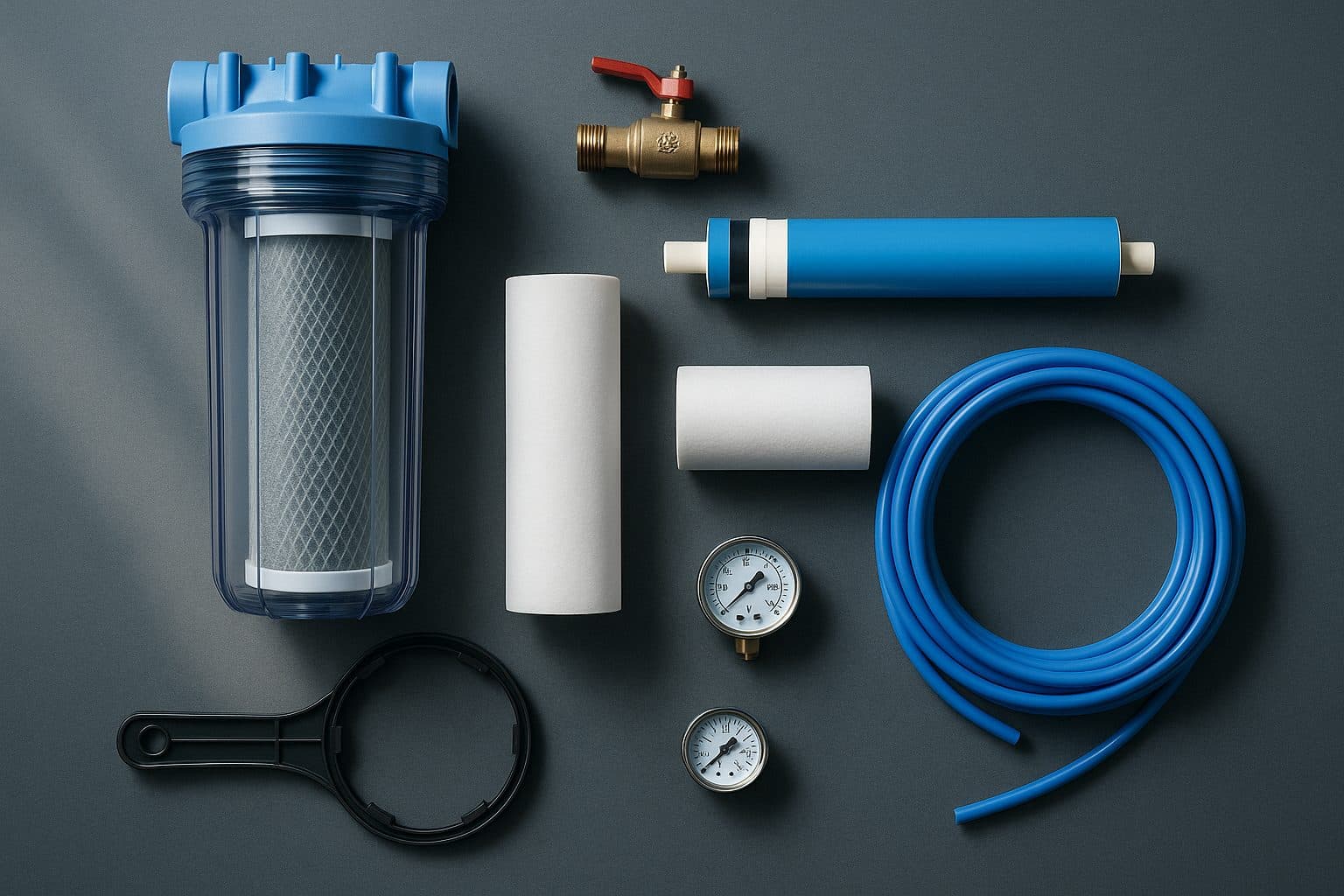
If your tap water tastes a little more like chlorine in July, you're not imagining it. Summer in Kamloops means warmer source water, higher treatment demand, and — during wildfire and freshet season — swings in turbidity that the city works hard to manage. Municipal water here is safe to drink, but "safe" and "tastes great" aren't the same thing. That's where home water filtration comes in, and the options range from a simple under-sink unit to a whole-home system.
What's Actually in Kamloops Water?
Kamloops draws primarily from the South Thompson River, and the water is treated and disinfected with chlorine before it reaches your tap. It's also moderately hard, thanks to dissolved calcium and magnesium picked up along the way. The most common complaints we hear from homeowners are chlorine taste and odour, scale buildup on fixtures and appliances, and cloudiness after spring runoff or nearby main work.
Your Filtration Options, From Simple to Comprehensive
Under-Sink Carbon Filters
A dedicated carbon filter at the kitchen sink is the most cost-effective fix for taste and odour. Activated carbon excels at removing chlorine and its byproducts, and a quality unit only needs a cartridge change once or twice a year.
Reverse Osmosis (RO) Systems
RO takes filtration further, forcing water through a semi-permeable membrane that removes dissolved solids, lead, nitrates, and most contaminants carbon can't touch. It's the gold standard for drinking water, though it produces water slowly and sends some to drain, so it's best suited to a dedicated faucet rather than the whole house.
Whole-Home Systems
A point-of-entry system treats every drop entering your home — showers, laundry, ice maker, everything. For Kamloops homes, the most popular setup pairs a large carbon tank for chlorine removal with a sediment pre-filter. Removing chlorine house-wide is easier on skin and hair, and it also protects rubber seals and gaskets in fixtures and appliances, which chlorine slowly degrades.
Filtration vs. Softening: Know the Difference
Filters remove contaminants; softeners remove hardness minerals. If your main frustration is white scale on faucets, spotty glassware, or a water heater that's losing efficiency, you may want a softener — or a combined system that does both. A water test tells you exactly what you're dealing with before you spend a dollar.
Signs It's Time to Consider Filtration
- Chlorine taste or smell, especially noticeable in summer months
- Scale buildup on showerheads, kettles, and appliances
- Dry, itchy skin after showering
- Cloudy water during spring runoff or after utility work
- You're buying bottled water regularly — filtration pays for itself fast
Professional Installation Matters
Whole-home systems tie directly into your main water line, and RO units need a proper drain connection and air gap to meet code. Our licensed plumbers can test your water, recommend a system sized for your household, and install it cleanly — usually in a single visit. Call Advanced Plumbing & Heating to get started before the summer chlorine peak.
Need Professional Plumbing Help in Kamloops?
Our experienced team is ready to help with all your plumbing, heating, cooling, and gas fitting needs.
Contact Us Today